

The textile industry is currently weathering a storm of unprecedented change. From aggressive decarbonization targets to complex compliance mandates and a relentless push for efficiency, the sector is under a microscope.
For the average textile or sustainability manager, the reality is one of extreme pressure. Often juggling seven or eight high-stakes topics at once with limited resources, these professionals find it nearly impossible to make a substantial impact. Organizations are forced to play a high-stakes game of prioritization: Where do we invest? Which topic takes precedence? How do we manage the pressure from brands, regulators, unions, and civil society?
Amidst this noise, one concept is emerging as the North Star for the industry: The Just Transition.
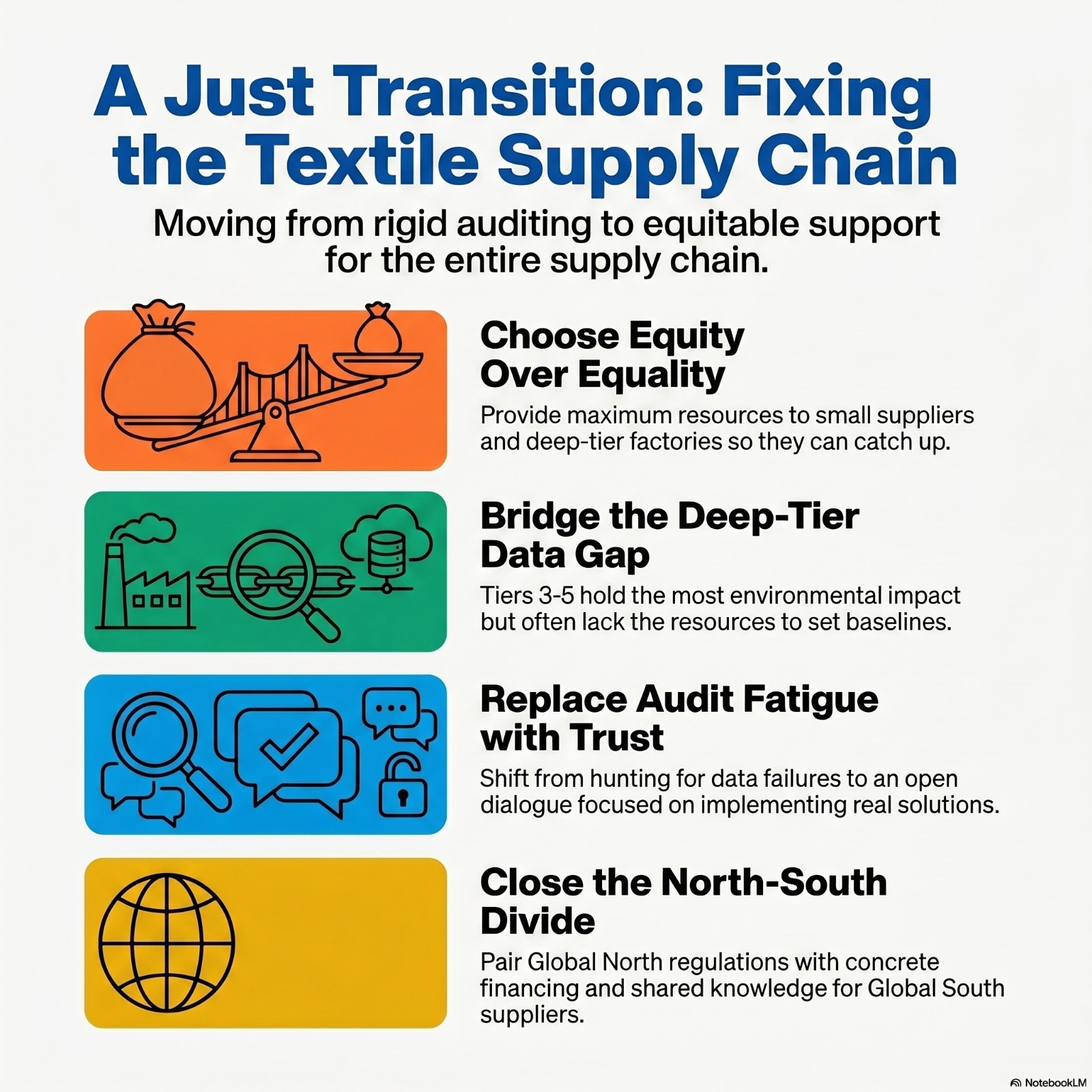
Equity Over Equality: The Heart of Just Transition
A Just Transition means everyone is given the opportunity to move toward a sustainable future, but it is rooted in equity, not just equality.
While equality implies giving everyone the same resources, equity recognizes that different actors start from different positions. In textiles, this means providing the “lowest common denominator”—often small-to-medium enterprises (SMEs) or deep-tier suppliers—with the maximum resources so they can catch up with the most advanced factories.
This journey is not a race against competitors; it is a race against oneself. Every organization has a different pathway and is at a different stage of its decarbonization strategy. To move forward, we must meet organizations where they are, understanding their specific gaps and resource constraints.
The Data Gap and the “Forgotten” Tiers
It is easy to call for resource sharing, but execution is difficult. The first hurdle is baseline data. Many SMEs lack the exposure or expertise to even set a baseline. Without this data, the industry cannot accurately identify which stakeholders in the supply chain need the most help.
Currently, most sustainability efforts stop at Tier 1 or Tier 2. However, the true impact lies further down the chain. Tier 3, 4, and 5—all the way to the ginners, fiber producers, and raw material providers—are often left behind.
The Reality of Impact: The textile industry is responsible for approximately 8% to 10% of global carbon emissions. If we do not provide solutions for the upstream suppliers (Tiers 3-5), we will never hit the climate targets required to mitigate environmental collapse.
Addressing the “White Elephant”: The Trust Deficit
The biggest obstacle to progress is the one few people want to talk about: a fundamental lack of trust. This lack of trust is the reason the industry is plagued by “audit fatigue.” We spend more time validating data and hunting for failures than we do implementing solutions. When we focus solely on finding problems in the data, we stall the impact we claim to seek.
To solve this, we must shift toward open dialogue and a belief in “positive intent.” We need a culture where advice is shared freely and information is viewed as a tool for growth rather than a weapon for penalization.
Bridging the North-South Divide
There is a growing friction between the Global North and the Global South. Regulations are often drafted in the North without consulting the suppliers in the South who must implement them. These mandates—traceability, tracking numbers, and complex documentation—frequently become a heavy administrative and financial burden on the Global South.
To move forward, we need:
- Knowledge Transfer: Brands often share the same suppliers. Instead of bombarding one factory with different versions of the same request, brands should collectively summarize and package their knowledge.
- Concrete Financing: Regulations must come with guardrails and funding. We cannot expect grassroots change without providing the capital to implement factory-level solutions.
- Grassroots Implementation: By solving issues at the source, we ensure that embedded water and carbon emissions are mitigated before they ever reach the consumer.
The Vital Role of Academia and Science
Collective action cannot happen in isolation. If we work in silos, we lose as a region and as a sector. This is where Academia and Science step in.
As neutral, non-profit actors, academic institutions can act as the bridge. Their role should evolve beyond publishing journals to:
- Commercializing Technology: Bringing sustainable innovations to the factory floor.
- Facilitating Knowledge: Acting as a trustworthy intermediary for data and best practices.
- Building Sustainable Supply Chains: Using research to protect biodiversity and reduce environmental footprints.
The Path Forward
The world does not have the luxury of waiting for everyone to catch up at their own pace. We need to accelerate change through collective, trusted action. When the whole supply chain works hand-in-hand to support those who have been left behind, a “Net Zero” future becomes more than just a goal—it becomes a reality.
What is the single biggest barrier you face in implementing sustainability at the factory level?